Voila, a varied list of meaty music morsels, here for your weekend heatwave reading perusal:
Money, Honey
Arts organizations everywhere are facing funding shortfalls, with American outlets especially feeling the pinch. The New Yorker published an article in late April outlining the realities particularly related to funding drops from philanthropic organizations; writer Helen Shaw quotes various members of said philanthropic outlets who state that funding should not be forever, for anyone. Niegel Smith, artistic director of The Flea Theater in New York, is blunt: “Since the nonprofit theatre movement solidified in the nineteen-fifties, we have faced government shifting, but not this kind of foundation retrenchment. When I entered the field, the sense was that you could work and prove yourself and then your company would win enduring support from the pool of foundations. That’s no longer the case.” (“The Show Can’t Go On”, The New Yorker, April 24, 2025)
A new article by The Globe & Mail‘s Josh O’Kane sheds light on a pay-for-play situation within the Canadian classical world. The Toronto Symphony Orchestra is allowing a wealthy amateur conductor to lead a performance of Mahler’s Second Symphony this coming week. The amount the individual paid the orchestra for the opportunity was not disclosed, but some TSO musicians (all of whom asked to remain anonymous) are unhappy. Interestingly, it was only last September that the orchestra received a $15 Million gift from the Barrett Family Foundation, the largest in the orchestra’s 102-year history. (“Amateur conductor pays Toronto Symphony Orchestra to lead Mahler performance, shocking some musicians“, The Globe and Mail, June 20, 2025)
What’s the relationship between location and innovation? A short rundown in Concerti explores various German opera companies who, facing needed renovations at their home bases, have moved to alternate locales, and found new methods and modes of both presentation and programming. The report is a little dismissive of Komische Oper Berlin — moving from Behrenstraße to “polite bourgeois Charlottenburg” (specifically the Schiller Theatre) has hardly dampened the company’s embrace of innovation. Large-scale presentations like Henze’s The Raft of Medusa (staged at an old hangar at Templehof Airport in 2023) and the upcoming Jesus Christ Superstar (at the same venue this autumn) might never been done so ambitiously, nay programmed at all, were it not for the renovations that forced the company from their longtime home. Still, this is good food for thought, especially at a time when dwindling resources may necessitate more creative approaches. (“Ungeahnte Impulse“, Concerti, June 13, 2025)
Humans First
Sir Simon Rattle received the 2025 Ernst von Siemens Prize in mid-May in Munich. The conductor is using the €250,000 prize to form a new period ensemble within the Bavarian Radio Symphony Orchestra (BRSO). In a comprehensive interview with BR Klassik’s Bernhard Neuhoff done earlier this month, the conductor (who is also the subject of a new documentary) reflects on his career and its changes and challenges. One quote (translated) particularly stood out: “You will need all experiences, because if there is only music, what’s the point? We have to be human beings first, and musicians second.” (This nicely echoes something Lucas Debargue said to me in early 2020.) The conductor is set to lead the BRSO in a new production of Don Giovanni at Festival D’Aix, and he’ll also be on the podium for a concert with the orchestra in mid-July (still in France), one featuring the music of Ligeti, Wagner, and Bruckner. (“So Hat Musik Sein Leben Verändert“, BR Klassik, June 6th, 2025)
A new column by Lynn Gardner in The Stage explores survey results of British theatregoers, and makes an obvious if important observation: “For those of us for whom theatregoing is a habit, we often forget that for many people a night at the theatre is a special night out.” (“Matching expectation to experience in theatre is getting harder“, The Stage, June 16, 2025) Gardner’s musings on the intersection of expectations and artistry brought to mind an interview in Van Musik between music writer Arno Lücker and author, film critic, and podcast host Wolfgang M. Schmitt, in which Schmitt shares how his classical passion came about, and what he thinks of companies targeting young audiences. (The title of the piece – which translates to “Classical music institutions are on the wrong track if they declare their older audiences to be a problem”– should be a tip-off.) Schmitt’s insights are fascinating: “Fewer and fewer people – and this is my cultural pessimism, which I feel is completely justified – are prepared to break away from social media in order to concentrate on something for an hour or two. If you are not willing to muster this ability to concentrate, then you will never be able to open yourself up to the realm of classical music.” (“Die Klassik-Institutionen sind auf einem ganz falschen Weg, wenn sie ihr altes Publikum zum Problem erklären“, Van Muzik, February 19, 2025)
The Devil Inside
Earlier this month BBC Music published an interesting little survey of the so-called “devil in music”, the tritone – known better (to some of us anyway) as the augmented fourth or diminished fifth, depending on the musical context. Creepy and essentially unresolved in sound, the chord was avoided throughout much Medieval and early Baroque writing. Steve Wright references a number of famous examples where the easily-identifiable chord is used: the writing for Don Pizarro in Fidelio; Debussy’s Prélude à l’après-midi d’un faune and La Damoiselle élue; Camille Saint-Saëns’ Danse Macabre; Sibelius’s Fourth Symphony; Bernstein’s West Side Story. Of course my personal favourite is its use as part of the famous Tristan chord. (“The ‘devil in music’: the musical trick once thought so dangerous that it was banned outright“, BBC Music, June 3, 2025.)
Demons (or more traditionally, daimons) are part-and-parcel of many folk legends and stories, though as a symbol they are heavily linked with Christianity and its concepts of sin, temptation, possession, and damnation. Aeon takes a fascinating look at their history, wisely (refreshingly) noting that “(t)he demons of the Christian Bible were none other than the daimons of paganism demoted, that is, the lesser divinities of the Greco-Roman religion superseded by Christianity after Rome’s conversion to Christianity in the 4th century CE.” (This brings to mind Waldemar Januszczak‘s excellent series on the (so-called) Dark Ages, in which he carefully links various Christian rituals, symbols, and depictions to ancient counterparts.) Writer and professor David Gordon White does something similar here, noting that “(f)or the monks of medieval Catholicism, the organisation of the demonic host replicated its own hierarchy” – an idea strongly reflected in the opera world. As well as being a reflection of repressive regimes, though, their influence is also often code for unleashed sexuality (The Devils of Loudun) or overheated fantasy (The Fiery Angel) or even simply awful people (Don Giovanni, and not only the main character, who indeed exits the work surrounded by said figures). White also examines Buddhist and Hindu traditions as well as the connection between language and myth. (“Demonology“, Aeon, May 12, 2025)
Is singing a crime? (I can hear some of you tittering.) It once was, at least in 16th century Geneva, when Protestant reformers led by John Calvin attempted to stamp out what they termed “illicit singing.” JSTOR‘s Livia Gershon quotes a 2015 paper by musicologist Melinda Latour examining song (and singing) in the town during that period – the role of Calvinism in shaping (dampening?) cultural life. Between 1542 and 1552, over one hundred people were tried in the civic-religious court for singing and/or performing works perceived by authorities as dance music – songs with sexy content, or anything dance-related (which, in turn, might lead to sex, which was a big no-no). As Gershon notes, “singing was considered a form of enticement to more serious offenses.” (“When Singing Was A Crime“, JSTOR Daily, May 9, 2025)
Reality As It Is
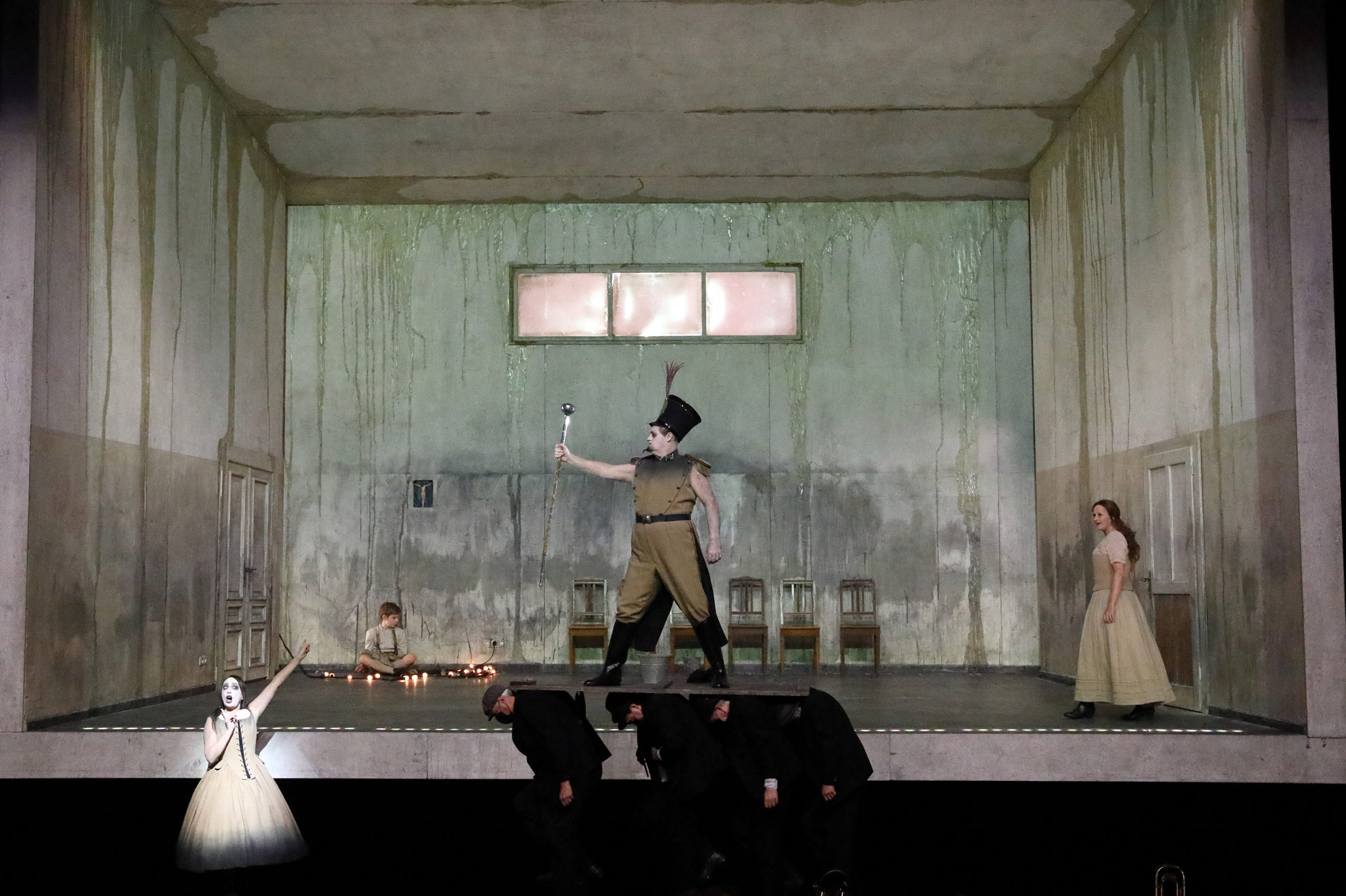
Dutch National Opera’s new staging of Boris Godunov (by Kirill Serebrennikov) will be broadcast on Mezzo TV on July 13th. Tomasz Konieczny sings the lead and Vasily Petrenko is in the pit. The production takes a very plus-ça-change approach to its subject matter, perhaps reflecting the house arrest experience of its director less than a decade ago, but more directly his attitude toward the current state of things in his homeland. “I believe in taking conscious, thought-through decisions, in trying to grasp and understand the reality as it is,” he recently told The Guardian’s Shaun Walker. Boris Godunov runs at Dutch National Opera (DNO) through the end of June; the run is sold out. (“‘It’s about self-destruction’: director Serebrennikov on his bleak operatic vision of Russia“, The Guardian, June 16, 2025)
Relatedly: the DNO Academy (DNOA) teamed up with Masters students at Leiden University for an Honours practicum called “Politics, Opera, & Philosophy”. Over the past few months, 25 students from a variety of programmes studied various aspects of the opera world; they attended a dress rehearsal, examined music and texts, and heard lectures from a variety of figures working directly in the industry, including conductors, directors, and dramaturgs, and *gasp* critics. (I like this.) Tim Meijers, who lectures in philosophy at Leiden University, worked with Paul McNamara, the artistic director of DNOA, to create a class that dove straight into issues (including outdated racial depictions) that clash with contemporary sensibilities and awareness: “Sometimes it’s super problematic, but then you go and listen to the music and think: wow! Do you just throw the whole thing in the trash?” The class concluded with a final concert of arias, duets, and scenes from well-known works. (“This course brings opera into the classroom: ‘Many themes are still relevant today’“, Leiden University, June 13, 2025)
Still with politics (and theatre): Globe Theater Berlin has partnered with Eastern European troupe Urban Theater for Krieg. Macht. Frieden (?) (War. Power. Peace (?) ) , a contemporary take on Shakespeare’s Henry V and complemented by texts from both Machiavelli and Hannah Arendt. (Urban Theater’s repertoire itself includes the intriguing-sounding Richter’s Fairytale, a meditation on the life and work of pianist Sviatoslav Richter.) Krieg. Macht. Frieden (?) opened Globe Theater Berlin’s summer season recently and runs through mid-September.
RIP Pierre Audi
Michael Quinn wrote an excellent obituary of Pierre Audi in The Stage following the director’s untimely passing in May. Rupert Goold, current artistic director of the influential Almeida Theatre, called Audi’s tenure “the purest expression of values that remain central to the Almeida to this day – experimentalism, internationalism, integrity, playfulness and, above all, a celebration of new artists.” In opera, Audi’s many accomplishments included the first Ring Cycle ever to be staged in the Netherlands; it was led by Hartmut Haenchen, with whom he worked extensively – and intensively. The conductor penned a thoughtful tribute on his Facebook page: “Es ging immer um die Sache und nicht die Person.” (“It was always about the cause and not the person.”)
The Ring Cycle one of many feathers in Audi’s cap over his three decades with Netherlands Opera, a company that went on to be renamed Dutch National Opera (DNO) during his tenure. Audi also helmed the British premiere of Verdi’s Jerusalem (for Opera North) in 1990. His artistic passion fully embrace new works as much as old, and he premiered a number of ambitious pieces including Thebans (by Julian Anderson and Frank McGuinness) in 2014 for English National Opera, and Innocence (by Kaija Saariaho) in 2021 and Picture a Day Like This (by George Benjamin and Martin Crimp) in 2023, both for Festival D’Aix, where he had served as director since 2018; three years earlier he had been named artistic director of New York’s Park Armoury. Pierre Audi passed away suddenly in Beijing in early May at the age of 67. (Pierre Audi Obituary, The Stage, May 12, 2025)
Thank you Mr. Burrell and Mr. Brendel
Colorado Public Radio published a very good obituary of legendary American bassist Charles (“Charlie”) Burrell. Profiled in a segment on Denver television news last year, Burrell said of classical music that “I didn’t pick it up; it picked me up.” Burrell became entranced with classical via a performance of Tchaikovsky’s Fourth Symphony, led by Pierre Monteux. Long considered “the Jackie Robinson of the classical world”, Burrell’s many accomplishments included working with the Denver and San Francisco Symphony Orchestras, as well as being a professor at San Francisco Conservatory of Music. (Sidenote: Burrell would eventually be taken for lunch by Monteux himself.) A recipient of the Martin Luther King Jr. Humanitarian Award and member of the Colorado Music Hall of Fame, the musician also has an arts school named after him in the Denver area. Charles Burrell passed away earlier this week at the age of 104. (“Classical bass legend Charlie Burrell dies at 104“, Colorado Public Radio (CPR), June 17, 2025)
News of Alfred Brendel’s passing this week has led to a waterfall of touching tributes and remembrances. Martin Kettle writes in his obituary for The Guardian that “(i)n performance, he eschewed glitz.[…] That was the deal. It was the music, not his personality, that the audiences came to hear.” Brendel gave his first concert at the age of 17 in Graz, Austria; through the next six decades he focused on Austro-German repertoire, recording the Beethoven concertos and sonatas (twice); all of Mozart’s piano concertos, and numerous works by Schumann, Brahms, Liszt, and Schubert. He accompanied singers in recital too, notably Dietrich Fischer-Dieskau with Winterreise. Brendel was also a poet, painter, and a teacher, and very supportive of other musicians (which is precisely how I encountered the pianist in Berlin years ago – at a performance by Martin Helmchen). Another pianist, Canadian Bruce Liu, wrote a simple, elegant post on his Facebook page: “You taught me how to find meaning between the notes.” Brendel passed away at his home in London; he was 94. (“A man of sense and wide sensibilities, Alfred Brendel was simply the pianist of pianists“, The Guardian, June 20, 2025)
Stay cool, readers – my heartfelt thanks for your continued support. More music and culture writing is coming soon (perhaps, maybe, I hope).
In the meantime: Remember the c-word.
 “A Distinct Musical Language”
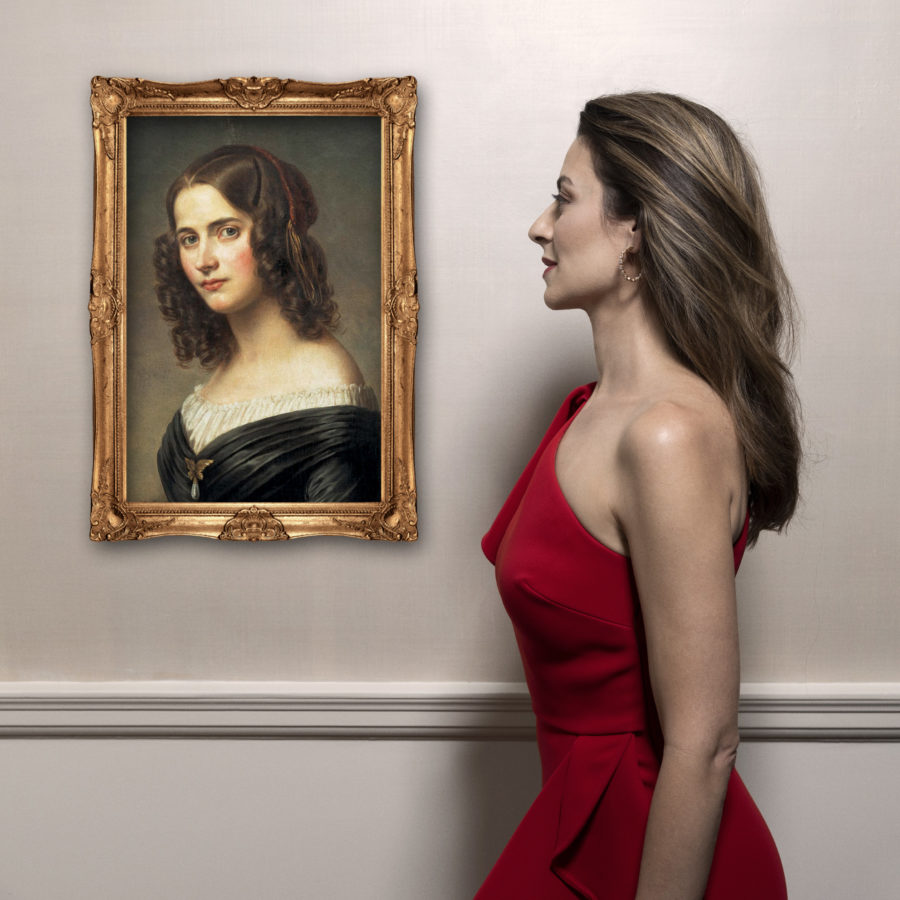
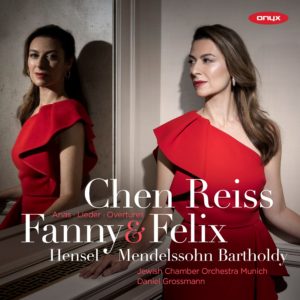 Acknowledging the various roles Hensel fulfilled in life allows one to more fully engage in her art, and to contemplate the whys, wherefores, and hows inherent to her creative process. Thus might one build an understanding, of not only her body of works, but the uniquely creative elements at play within them. Elements of the past (Bach, Beethoven, Schubert), contemporaneous (Schumann, Liszt), and future (Brahms, Liszt) intermingle in some thoughtful ways, and one senses, especially in her later works, a through-compositional style that would’ve found fulsome expression on the opera stage, a medium for which she would have been eminently suited. Soprano Chen Reiss agrees on this point, and brings her own beguiling brand of elegant, operatic flair to a new album. Fanny Hensel & Felix Mendelssohn: Arias, Lieder & Overtures (


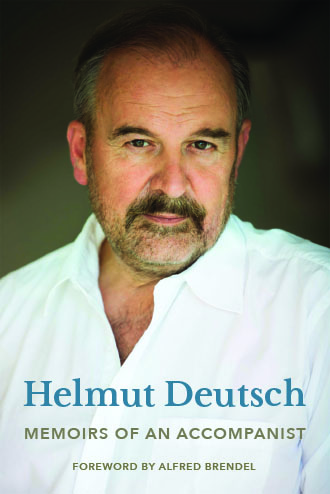 Your memoir is especially notable for its candour; that’s a refreshing quality.