Tag: singers

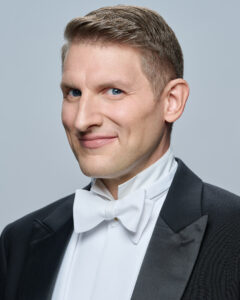
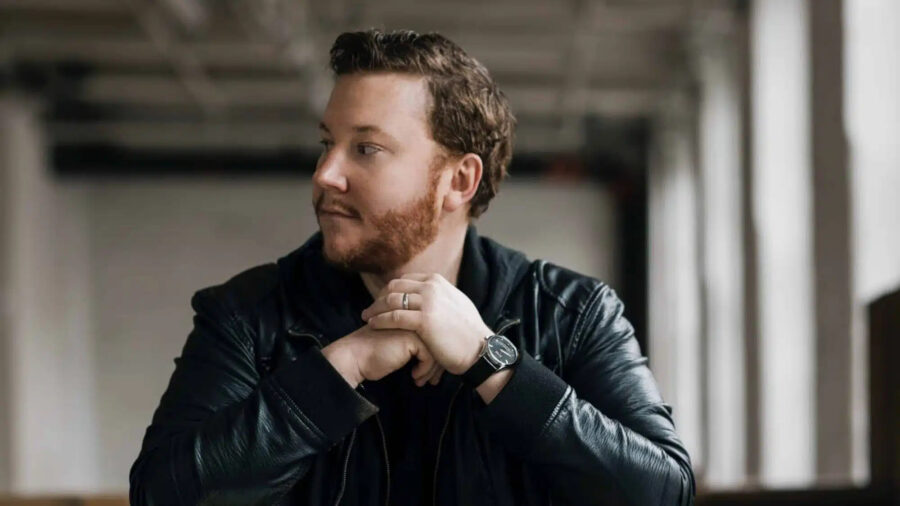
Nicholas Brownlee, portrait, profile, opera, bass-baritone, singer

Nicholas Brownlee: On Opera, Emotions, & Being “A Whole And Total Person”

Nicholas Brownlee smiles when asked if he has any summer plans.

“Not really,” comes the response, “but I think I know every inch of track between Munich and Bayreuth.”

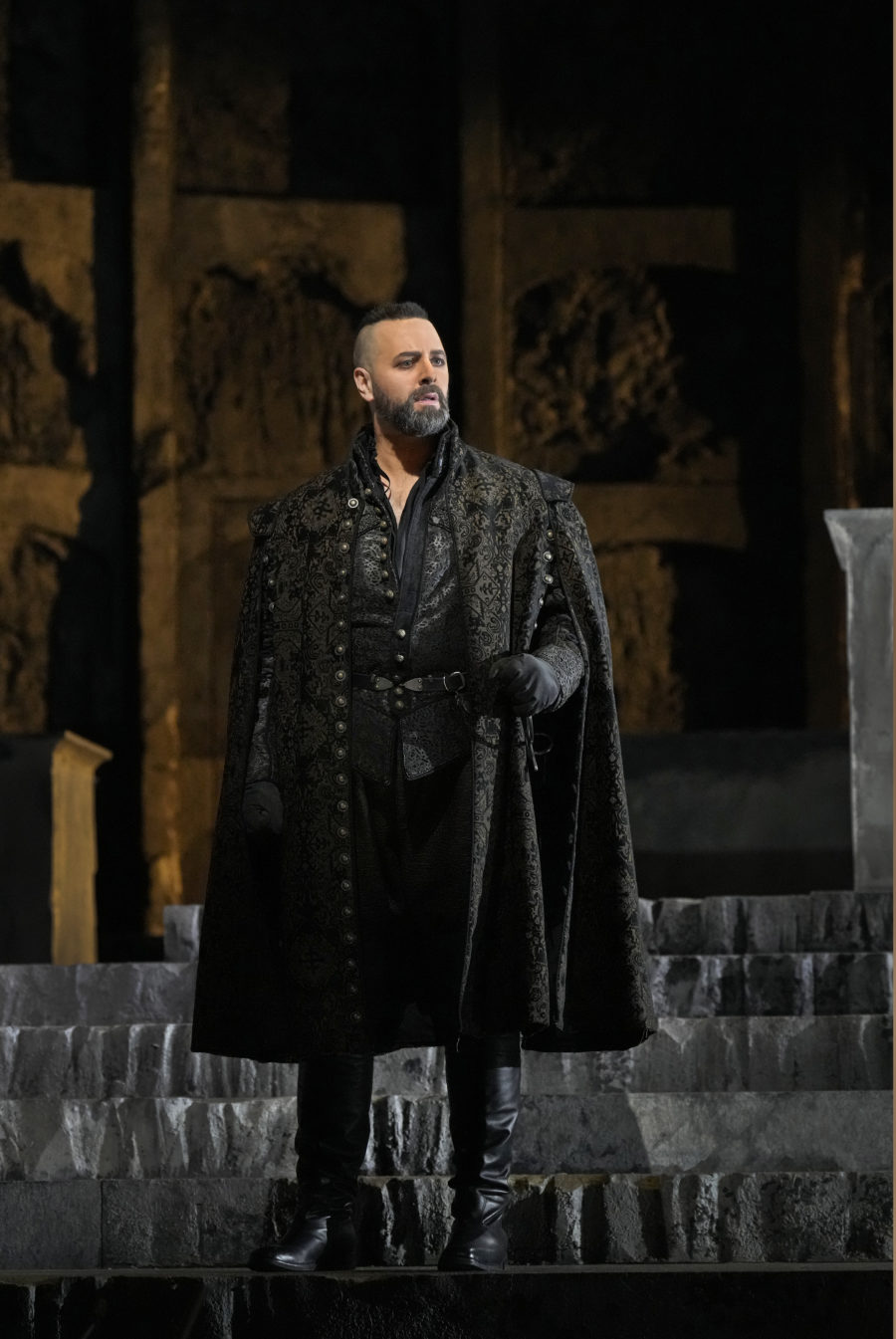
The American bass-baritone has been singing non-stop, or so it seems, for over a decade. This past season has been especially focused on the work of Richard Wagner, starting last autumn at Bayerische Staatsoper in Munich with a highly acclaimed production of Das Rheingold directed by Tobias Kratzer, with Brownlee singing the role of Wotan, King of the Gods. The production was revived this past July for the company’s annual summer opera festival. This summer he returned to the Bayreuth Festival, following his debut there last summer, as Donner in a revival of Das Rheingold, directed by Valentin Schwartz and conducted by Simone Young. Between rehearsals for the two revivals, Brownlee clocked up a lot of mileage with Deutsche Bahn.

The journey for a “classic-American boy” from Alabama, as you’ll read, has been longer, if also deeply rewarding. Winner of the 2025 Richard Tucker prize, Brownlee’s journey has been characterized by a nose-to-the-grindstone approach, one that has never been at the expense of intelligent singing and a colourful, rich sound. The bass-baritone, who was awarded first-prize in the Hans Gabor Belvedere Singing Competition (2016), the Zarzuela prize at Operalia (2016), and was a winner in the Metropolitan Opera National Council Auditions (2015), got his start studying at the University of South Alabama before getting his Master of Music degree from Rice University. From the 2014-2015 to 2016-2017 seasons, Brownlee was a member of the LA Opera Young Artist program; he also appeared with the International Vocal Arts Institute in Tel Aviv, was part of the inaugural Young Artist Vocal Academy with Houston Grand Opera; spent a summer in Beijing with I Sing Beijing, and was part of the ensemble of Badisches Staatstheater Karlsruhe, where he performed a range of works by Handel, Massenet, Gounod, Offenbach, Mozart, and Verdi, and others. The 2020-2021 season saw him join the ensemble of Oper Frankfurt, where he has been based ever since. There, Brownlee has added the music of Verdi, Mozart, Strauss, Szymanowski, Bizet, Bartók, Giordano, Stravinsky, and a great many more to his repertoire.

He has since performed with Wiener Staatsoper, Opernhaus Zürich , Irish National Opera, Teatro dell’Opera di Roma, Teatro de São Carlos (Lisbon), The Metropolitan Opera, LA Opera, The Dallas Opera, Santa Fe Opera, Atlanta Opera, and Bard SummerScape,  expanding his musical palette to include the work of Erich Korngold (Das Wunder der Heliane, 2019) as well as contemporary composers like Jake Heggie (Moby Dick, 2015) and Unsuk Chin, whose Alice in Wonderland was presented in 2015 in concert with the Los Angeles Philharmonic and conductor Susanna Mälkki. He has also performed with the Houston Symphony Orchestra, Orchestre Symphonique de Montréal, the Prague Philharmonia Orchestra, and Orchestra Sinfonica Siciliana; next season sees him give concert performances with the Houston Symphony (Tristan und Isolde) and the orchestra of the Gran Teatre del Liceu (Mahler’s Eighth Symphony).

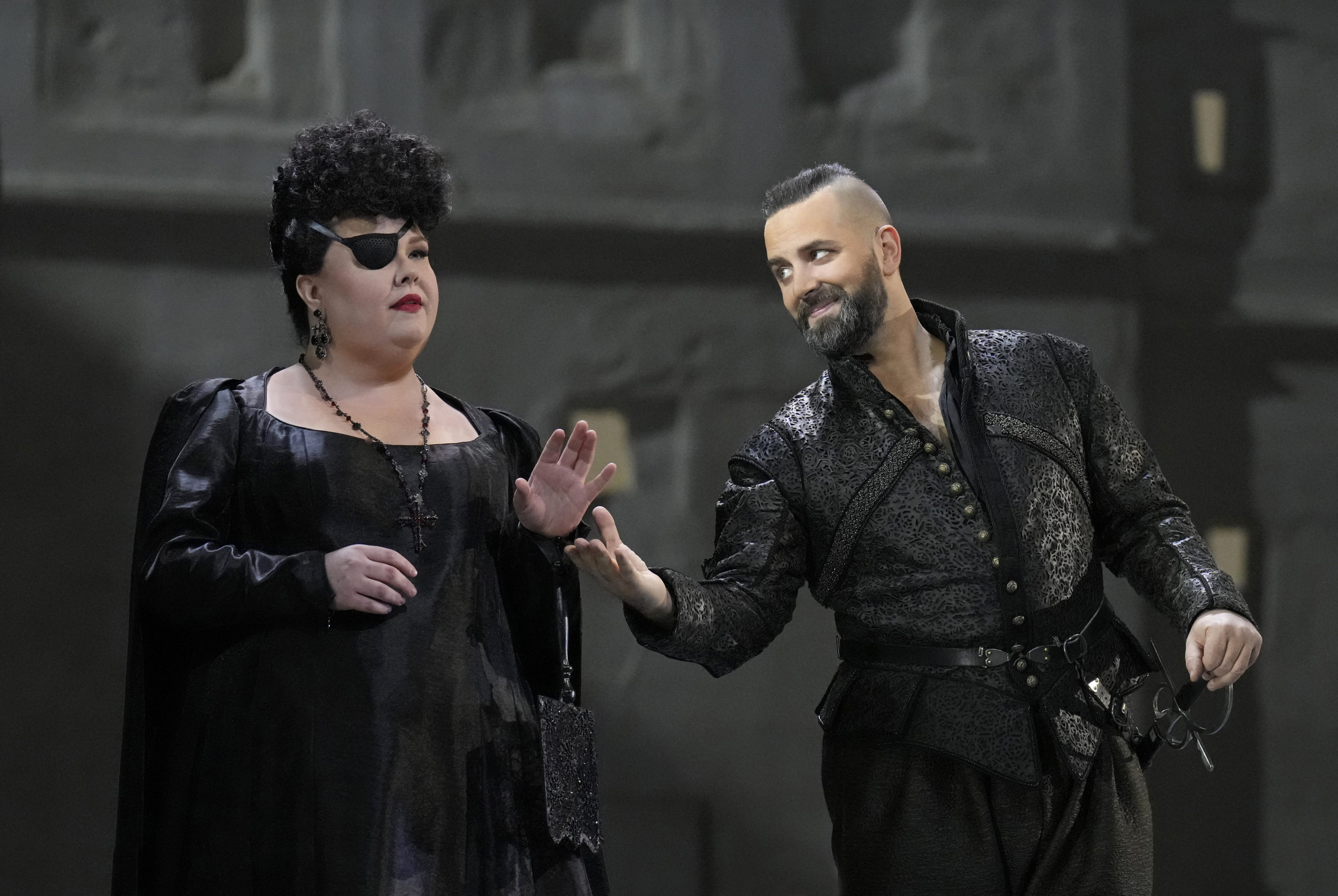
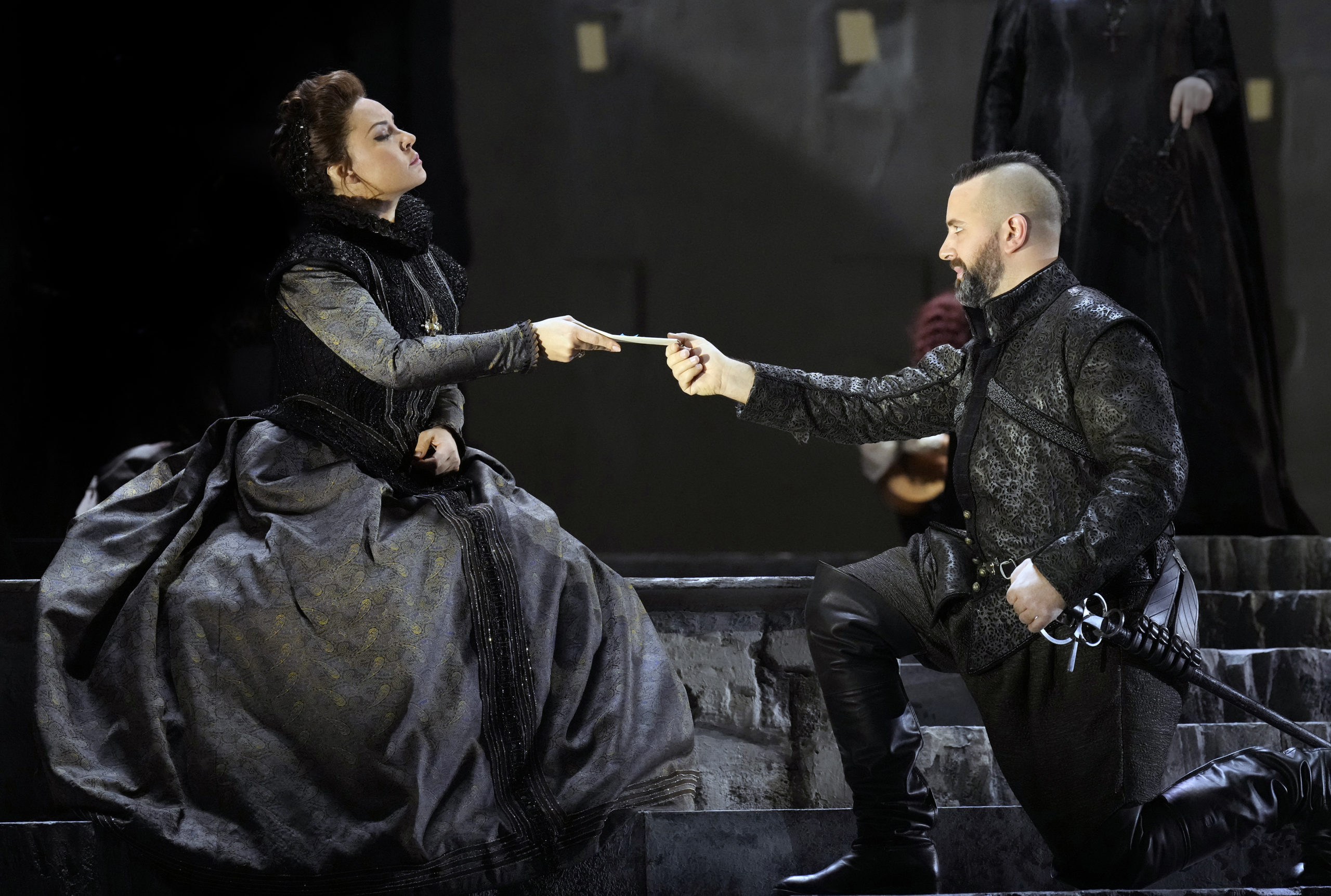
Whether in-concert or onstage in opera, Brownlee is never less than fascinating. In 2024 he gave a particularly zesty portrayal of Don Pizarro in a unique production (by Andriy Zholdak) of Beethoven’s Fidelio at Dutch National Opera, in which he was made to resemble high fashion honcho Karl Lagerfeld. One definitely isn’t supposed to root for the bad guy in Beethoven’s paean to freedom and fidelity… and yet. Something similar could be said for his Wotan in the Bayerische Staatsoper production of Das Rheingold – though Wotan is less villainous, as Wagner fans will know, than he is ruthlessly ambitious. Brownlee placed emphasis on the “ruthless” part, offering a multifaceted portrayal of the Valhalla god, by turns playful, brutal, seductive, highly selfish and deeply driven – human.

We discussed that and more last month, at the almost-end of what had been a very busy, Wagner-heavy season. Along with Wotan in Munich in October (and again in July), early February saw Brownlee sing the same role for his house debut with Opéra national de Paris (directed by Calixto Bieito) and Oper Leipzig, in a revival of  Rosamunde Gilmore’s 2013 staging. From there, Brownlee performed as the doomed title character in Der fliegende Holländer (The Flying Dutchman) at Palau de les Arts Reina Sofía (Valencia), Teatro Regio di Torino, and Bayerische Staatsoper. He sang the role of Amfortas (Parsifal) with Oper Frankfurt and in a concert presentation with Cēsis Art Festival and the Latvian National Symphony Orchestra. Recently in Bayreuth, Brownlee stepped in at the last minute for the singing role of Hans Sachs in Die Meistersinger von Nürnberg. His 2025-2026 season opens with a role debut as Balstrode in Peter Grimes in Frankfurt (opposite tenor Allan Clayton in the lead) before travelling to Hong Kong to sing Amonasro in Aida; his hectic future also includes a performance of Jochanaan in Salome with Lyric Opera Chicago, a turn as the Dutchman opposite Asmik Grigorian’s Senta in Bayreuth, and of course, a return to Wotan with Die Walküre with Bayerische Staatsoper, both next summer. One suspects the Munich-Bayreuth line is going to be especially well-used.

Brownlee’s impressive vocalism, with its oaken shades and bronzed ringing top, joins seamlessly with an effortlessly magnetic stage presence and thoughtful artistry – and comes minus any divo attitude. The “charismatic and charming” description by The New York Times (from a review in 2015) is not inaccurate; offstage however, the bass-baritone’s charisma is powered by a refreshing lack of pretension or putting-on of any artiste-style airs. He is a star, make no mistake, but he wants to make sure audiences don’t just hear him, but feel him, and his musicality especially, with all the earth of sonic experience viscerally moving between fingers and toes. This isn’t singing from the heavens so much as from rolling around in that very earth, while, to borrow from Wilde, gazing at the stars. That’s the magic of Nicholas Brownlee as person and performer, onstage and off.

Over a lunch of salad and mineral water, and on the very day of the Munich Rheingold revival, Brownlee spent a good hour-plus musing on singers of all genres (he is a big Roy Orbison fan), the realities of German ensemble life, the importance of embracing his background (including creature comforts), living with (and as) Wotan, and why all opera essentially revolves around four basic human emotions.

Nicholas Brownlee, opera, stage, bass-baritone, Der fliegende Holländer, Wagner, Bayerische Staatsoper, performance

Nicholas Brownlee in the title role of Der fliegende Holländer, Bayerische Staatsoper, 25 March 2025. Photo ©Geoffroy Schied

Early Inspirations

Some singers have a clear idea of what they want to do – “When I first heard Aida, I knew I had to be Aida,” or “When I first heard Traviata, I knew I had to be Violetta” – was it the case for you with the music of Wagner, or was it a more circuitous route?

For me opera was, and continues to be, a very interesting journey. I have no classical music in my family at all, although I originally wanted to be a conductor; that’s how I fell in love with music. I had a high school teacher who introduced me to big symphonies and gave me a full music education in a public high school in Alabama, which was and is rare. And so I went to school to be a conductor and pianist. And it wasn’t until I was in the first opera I ever saw that I really thought about singing.

Which opera were you in at the beginning?

I was in the chorus of La traviata with the Mobile Opera. They still exist and I’m on the board there now. I then fell head over heels in love with opera through them.

Was there a big “a-ha!” moment – “Wow, I can sing this stuff!” – or was it more gradual?

I was always singing and performing in my household – Elvis Presley; Conway Twitty; old-school country music. I think it makes you a balanced performer to know that work. And I think when you look at singers like Tom Jones and Elvis and Roy Orbison, all those guys, they’re just beautiful, I mean… wow, they are just really good singers! They sing in tune; they sing unfixed post; they project – it’s all really good stuff. So with all that music at home, I would also sing and perform. In college I had a professor who was already sort of pushing me to sing; when I would have my exams, he would say, “You have a voice, and it’s operatic; I can hear it in your speaking voice.” I was 19 years old. So then I changed my focus to include voice in my major, and I started taking voice lessons. That was 16 or 17 years ago or so now, and there have been a lot of steps, but it’s been incredible.

Opera for me was the first thing I ever truly felt comfortable in, really. I grew up your very classic-American boy; I played American football and baseball and golf. I didn’t really know I felt uncomfortable then – I felt perfectly comfortable, in a way – but then I got around opera singers and various other artists in rehearsal rooms, and all my dark jokes were met with smiles. It was like, “Ah, welcome to the craziness!” That was when I felt the most comfortable, and I knew that I’d found a home.

Honest Friends = Good Friends

How does that sense of community translate to your experiences now? Doing opera productions, one forms this little club, and then when the run ends, so does the club – I would imagine that’s tough.

Well, it’s gotten easier. It is tough when you’re beginning because you’re young, you’re right out of school, and school is such an insular community. Then you go into your young artist program, and you’re all together like we were in LA for two years, having every meal together; in a way there are very frat-like vibes in a young artist program, because we’re all in it together… but then, all of a sudden, you are a freelance artist.

And those first few years, you’re working, sometimes with people in similar age ranges, and you realize people may take different paths: teaching, coaching, management. So you learn that every gig is different people, but each time you’re creating a bond. Maybe you have a show romance with someone or you think you’re best friends and you trade numbers. You’re like, “I found it! I found my best friend!” – and then it’s just gone. And then you go away and you don’t have time to figure it all out and real life kicks in. It’s so hard to get to this level – the amount of, not just talent, but luck it takes, the stress, the energy, the training, everything… it’s a lot. There are so many things you are forced to deal with. You end up working with some of the same people also, so there are little mini-reunions twice or sometimes three times a year, and that’s really important. From that, you start to forge actual friendships with roots and depth – and that, for me, has been a huge change.

Has that depth affected your performance practices?

I’ve been in the ensemble for five years in Frankfurt. The way we use our ensemble is so special. For instance, we’ll do a full Salome, and it’s everybody in the ensemble. We do a full Ring Cycle; it’s everybody from the ensemble. So you’re singing with some of your real best friends – like, all of our kids play together in real life. We have a lot of life there together and you get to do opera with them also, and so there’s a real safety, but more than that; there’s this ability to like feel like you can take chances that you wouldn’t normally take when you’re a guest in a place – because that trust is already there, it’s established. And, to be quite frank with you, it’s good to have friends who are close enough to sometimes say, “Well, that didn’t work, that thing you were trying to do.”

It works the other way also. Right before we went out and did a twelve-show run of Macbeth, I saw a friend of mine and they said, “I’m going to do it this way tonight” – and later it was like, “Bro, you gotta do that every night!”. There’s a beautiful, natural camaraderie amongst the singers, something that can be really hard to find.

Camaraderie, Comforts, & Life Between Plans

How do you negotiate life as an American in Europe?

It’s hard. I think you know I’ve lived here for nine years now. I was first in Karlsruhe for four years, then in Frankfurt now for five years. I think, like anywhere, you just have to find your people – you have to find your way of living. For instance, in the first four years my wife (mezzo-soprano Jennifer Feinstein) and I were here we went full-European: no car; lived in the heart of the city; walked everywhere – rain, snow, didn’t matter. It was really difficult. And then when we moved to Frankfurt, my wife and I were both like, “Look, if we’re going to really lean into here, why don’t we at least have some of the comforts from home?”

So we still live centrally, but further out. We bought a car we go grocery shopping with; we buy in bulk. We bought a big, American-style refrigerator with ice on the door. We bought screens for the windows. You have to find your creature comforts, these little things that, for better or worse, we grew up with, culturally. You cannot help where you’re born; you cannot help or change what is your homeland. And so, you adjust and you acclimate as much as you can – and then enjoy your creature comforts.

I would imagine that actually helps you on stage, knowing you have that kind of predictability at home.

Yes, and understanding that decision fatigue is a real thing also. It’s really hard to know, as a person living in a foreign place, exactly what you want initially, and how you want your life to look on a literal day-to-day basis – especially as an artist. I mean, as artists we are always looking at the big picture in this zoomed-out way, but the details matter, like “Wow, this person is probably a little dehydrated; he needs a coffee” – it’s just that simple sometimes.

Nicholas Brownlee, Sean Panikkar, Lucie Thies, Bayerische Staatsoper, Das Rheingold, Wotan, Valhalla, Tobias Kratzer, opera, Wagner

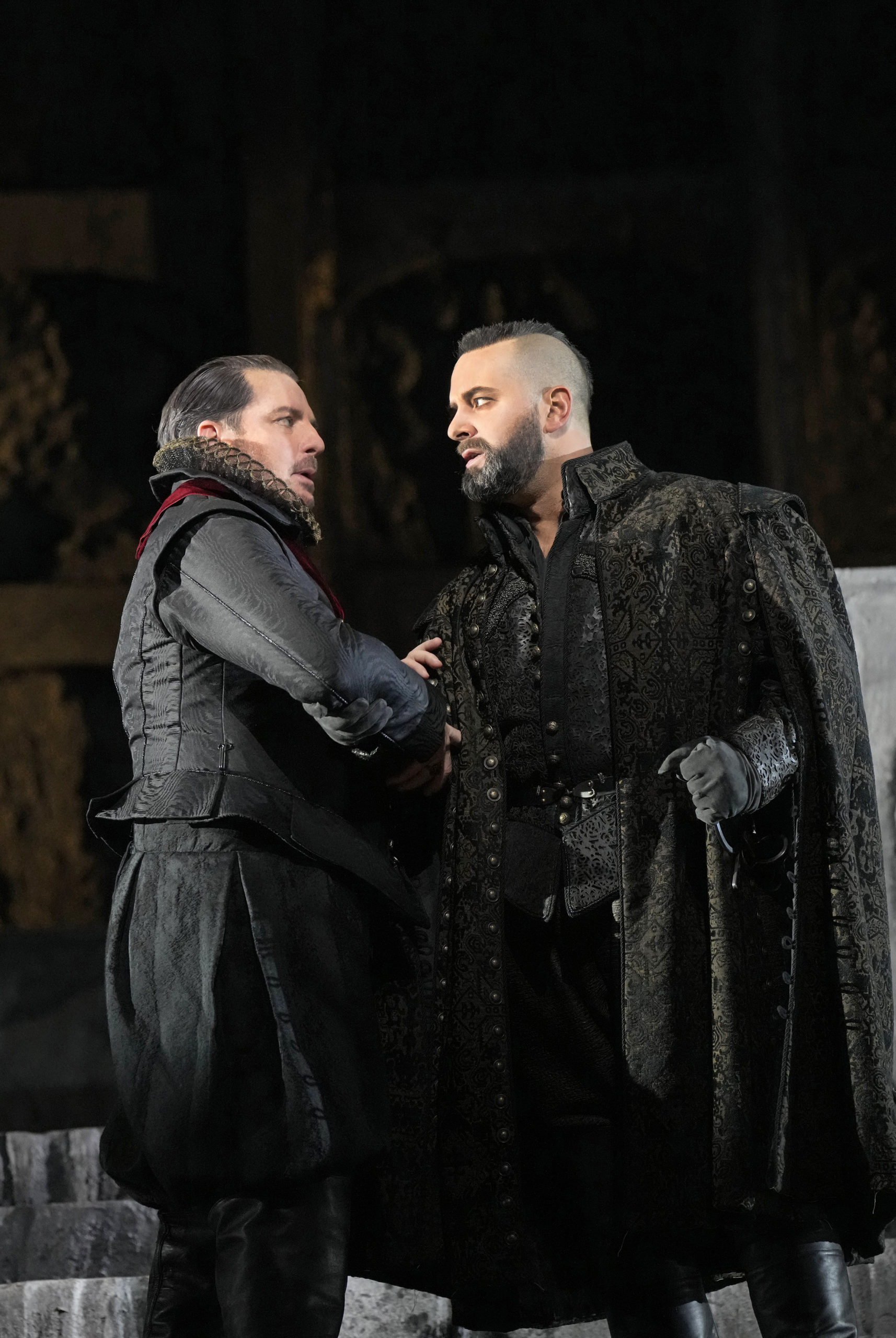
Film still from Tobias Kratzer’s production of Das Rheingold for Bayerische Staatsoper. (L-R) Sean Panikkar as Loge, Nicholas Brownlee as Wotan, Lucie Thies (Bavarian State Opera extras). Photo © Manuel Braun, Jonas Dahl, Janic Bebi

Does Wotan want a coffee, then?

Yes! I mean, the question as to whether Wotan’s actually a human or a god or whatever… sometimes people are just people, and the answer is very simple. And I think that that’s the thing that gets us through day-to-day life. I think that it’s taken me a long time to come back around to this idea; I was raised very blue-collar, and then I got to college and I met a variety of different people, and I wound up getting a little too lofty for my britches, I would say, a little too heady and a little too looking-down-at-my-past culture and how I was raised – and now, I’ve come right back around. I think that that’s being a whole and total person. I think that’s what people mean by being worldly.

The ability to sit in a cafe in Paris and argue about philosophy until 2am is really nice, and really fun, and boy do I love that kind of thing, but I also love when I get invited by a nonna for an incredible meal that involves four ingredients – that is life; that is experience. It’s easy to fall into thinking opera’s this big, flowery thing, but, I say this all the time, I really am just screaming into a black void…

… with great precision and beauty.

That’s true, but I’m also doing it because I want to display the four base emotions of human life and try to shed a little bit of light on them. In order to do that, I say some of the most lofty things, especially singing Wagner – it’s the most poetic German you’ve ever heard in your life. Yes, we can break down the chords and we can talk about how gorgeous the music is and all of it, yes – but really, for me, what there highlights the four most basic human emotions: love; anger; sadness; the fourth one is complicated, maybe something like saudade, longing, sehnsucht. And I think that that’s what opera is. It’s trying to capture those four base emotions. Of course we can discuss its incredible power at various levels: the scary power of the church in Tosca; the power of economic hardship in Bohéme; Wotan’s testing and exercising his own divine power in The Ring. These stories aren’t distant; they’re very real.

With this Wotan I’m singing in Munich, I think of it like Elon Musk when he was 31 years old and had just sold PayPal; you can listen to interviews from that time and hear that he was walking along that line of power and how to use it. Wotan in Rheingold feels like somebody I might know, somebody who was young and made it big and is walking this line now. I mean, imagine you have the keys to the city, to every single city, the secrets of many, infinite knowledge, any male or female wants to be next to you – or more – all the time; how is that shit not going to corrupt you? Of course it will. Having that kind of a life is not the way life is really meant to be – it’s weird. The way this production ends really underlines that.

So what do you think has this experience taught you overall?

Some of my colleagues will say to me after a performance, “Look, you have this life, it’s a good life; whatever you do, Nick, hold onto it.” As much as Wagner is great, Bayreuth is great, Munich is great, it’s all very great – it’s important to have a life outside of opera. I think it’s really imperative. You can easily forget that life happens outside the opera house each and every day; you zoom in, and then you zone out. My wife is a big planner and I’m very spontaneous, and we’ll talk about meeting in the middle, but we always say in the end: life is really between the plans. Life is now.
Top photo: Fay Fox
Chanticleer, early music, vocal ensemble

Chanticleer: On Music, Modernity, Social Media, & Singing Machaut

When most people hear the words “classical religious music” they might immediately think of Requiems by Verdi and Mozart or sprawling Masses by Bach and Beethoven. The work of Guillaume de Machaut may not be top of mind, yet the 14th century French composer is a central figure within Western musical expression and development. He was also a survivor: Machaut endured the disastrous Black Death that killed a third of the European population.

Messe de Nostre Dame (Mass of Our Lady) was composed in 1365 for the Cathedral at Reims where Machaut was serving as a canon; the work marks the earliest complete setting of the Catholic Church’s Ordinary of the Mass (the part of a mass which is constant) traceable to a single composer. As music writer Davis Smith noted at their website A Taste of the Divine Specific in 2022, Machaut’s Messe (written in Old French) is notable because “it is the first large work of Western music to showcase an individual voice […] perhaps the first truly major musical statement.” More precisely:

Machaut’s music serves the purpose of worship and brings the listener closer to the source—and sound—of his faith through the mastery of poetic idioms, translating the established text into abstract sonic patterns, exploring the potentials of the human voice in combination with others, painting the diction and meaning of the Mass text with meticulous strokes, playing with sonorities and their relationships, testing the boundaries of what poetry and music alike can do. In so doing, he paved the way for all composers within the following 400-year period.
(Davis Smith, “The Poetry of Sound and the All-Wellness of Faith“, June 23, 2022)

Various recordings of the Messe have been made through the years, all of them utilizing a variety of vocal styles specific (or in some cases not entirely tied) to early music performance; the Taverner Consort and Taverner Choir (1984), the Oxford Camerata (1996), and Antwerp-based Graindelavoix (2016) are just a few of the groups to have put their individual stamp on the work. Machaut also composed a wide variety of songs, many of them written in first-person and exploring terrestrial concerns like courtship, longing, and heartbreak; his ironically-titled Le voir dit (“A True Story”) is a meta-fictional narrative which mocks contemporaneous tales of courtly love even as it seduces the listener with its flowing poetry and intriguingly modern-sounding vocal writing.

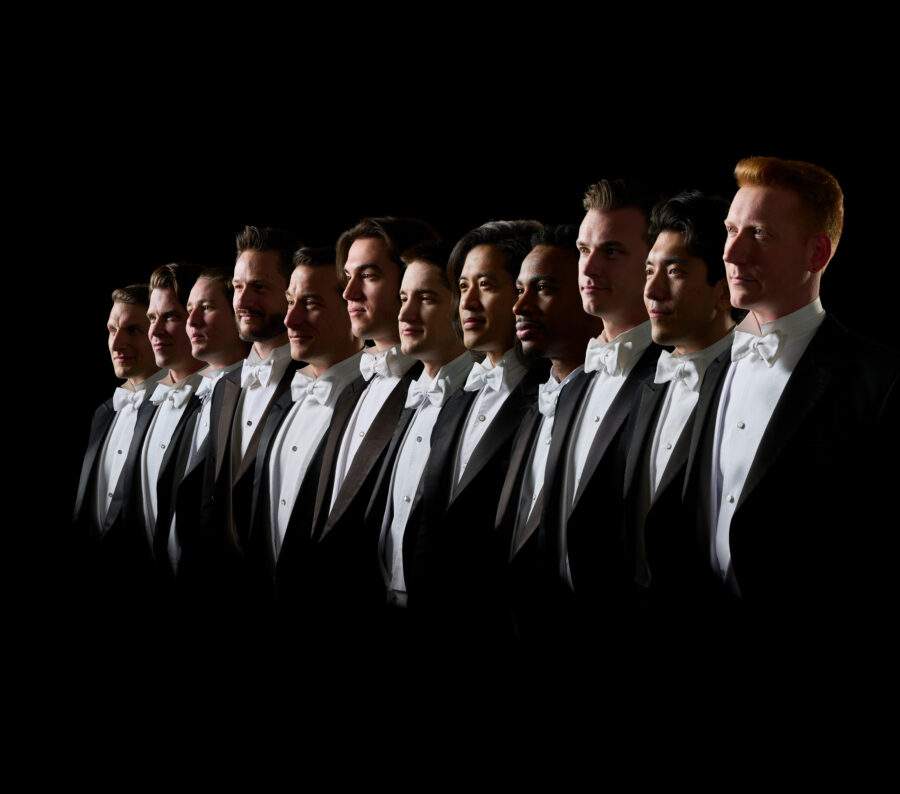
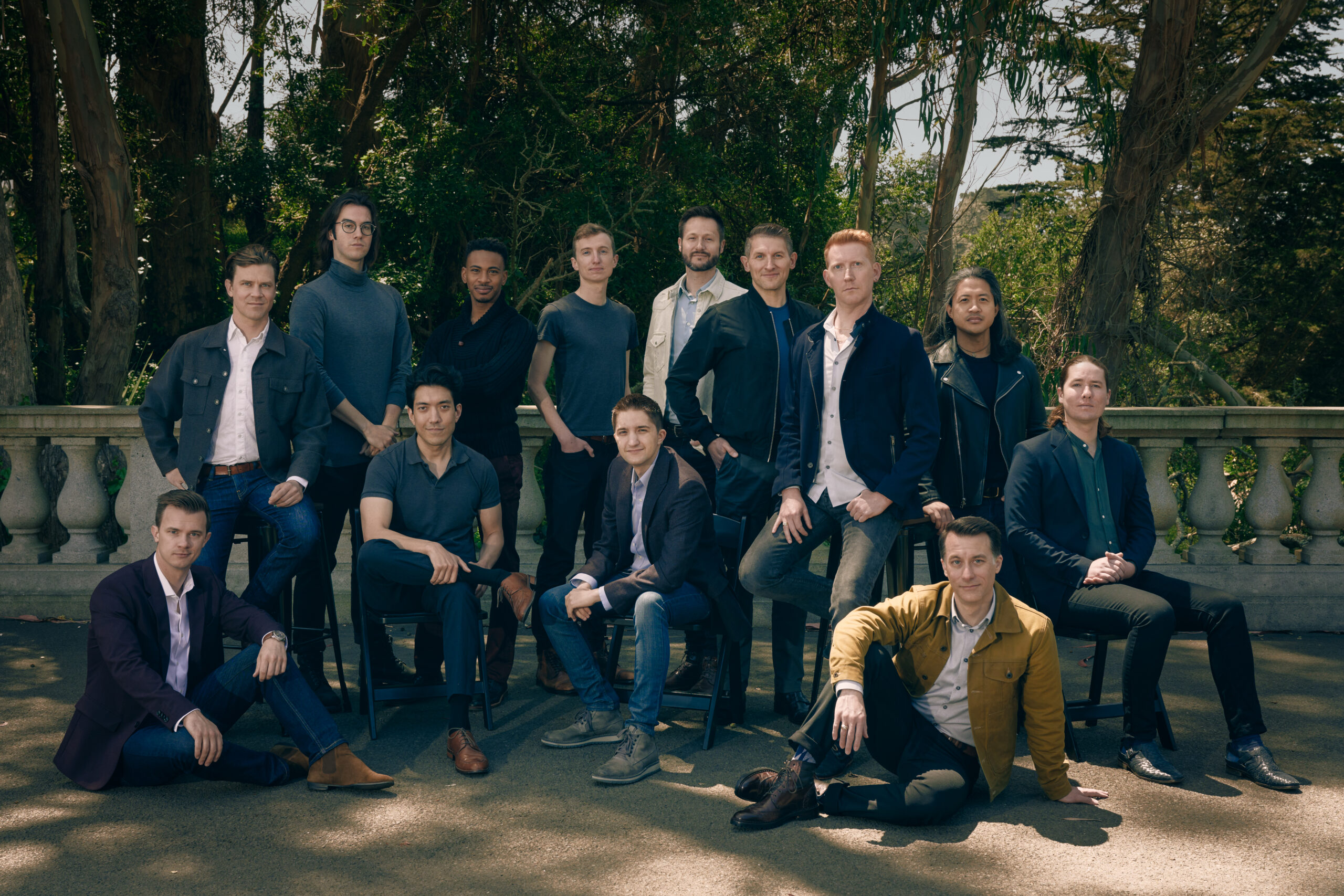
That paradigm of new and old sounds is something Chanticleer specialize in. The ensemble will be performing the work of Machaut in a series of concerts in California between June 2nd and 9th, with each one featuring the Messe de Nostre Dame interspersed with selection of his secular works and those by medieval contemporaries. This musical curiosity comes naturally to Chanticleer. Known as “an orchestra of voices”, the group was formed in 1978 by tenor Louis Botto, who cleverly named it after the singing rooster in one of Chaucer’s Canterbury Tales. Initially exploring the music of the Renaissance, their musical palette has expanded to include a host of sounds from a variety of eras, thanks in no small part to Music Director Emeritus Joseph Jennings, who joined Chanticleer as a countertenor in 1983. Assuming the position of Music Director a year later, he remained with the ensemble in that position until 2008 when he stepped down and assumed the title of Artistic Advisor; during his tenure the ensemble released a tremendously diverse and often Grammy Award-winning array of recordings showcasing the ensemble’s vocal flexibility, from early music (Josquin, Palestrina, Byrd, Desprez) to spirituals and traditional gospel music to jazz.

Current Music Director and countertenor Tim Keeler has continued this tradition of expanding the ensemble’s oeuvre while happily embracing a 21st century approach. Recent ecologically-themed programs have included tje song cycle The Rivers are our Brothers (which includes “I Am A Tree“, a live performance of which was recently captured during a tour stop at Toronto’s Koerner Hall) by neoclassical-electronic composer Majel Connery, as well as “I miss you like I miss the trees” by electro-acoustic composer Ayanna Woods, who is also Chanticleer’s composer-in-residence. Their social media platforms feature the group performing contemporary and nostalgic pop hits, gospel, and a sample of chant from the video game “Halo: Combat Evolved”. A busy summer is in store for the group, with German dates to include a premiere appearance in Dresden (at the city’s storied Frauenkirche) and another in Ludwigsburg, performing for the first time with British vocal ensemble Voces8 – but before all that, there’s Machaut and his unique Messe. Is it really a work only for the religious and/or early-music-loving ears?

Keeler (TK) and countertenor and Assistant Music Director Gerrord Pagenkopf (GP) think otherwise. “It’s early music,” Keeler recently told San Francisco Classical Voice writer Jeff Kaliss, “but you almost have to approach it with a new-music sensibility.” He and Pagenkopf recently shared their thoughts on the Messe and a variety of Chanticleer initiatives, many of which offer a unique integration of entertainment and education, with any enlightenment for audiences a natural and happy side-effect of smart, approachable musical presentation.

Chanticleer, vocal group, early music, ensemble, singing, voice, music

Photo: Stephen K. Mack

What’s it been like to explore the music of Guillaume Machaut?

TK It’s been a bit of a switch. We do so many different styles of music in Chanticleer. We started as an early music group back in 1978, singing Renaissance music mostly, and we still do a lot of Renaissance music in our programs and on tour; last year was our William Byrd anniversary program, the year before that was another Franco-Flemish program. But rarely do we go so far back as medieval music, which is a genre in and of itself, very unique and very specific. The way you sing it, and the harmonies involved, it almost feels modern in some ways.

How so?

TK Well, in a sense, it’s very unpredictable. As I said we do a lot of Renaissance music, and when you do a lot of Renaissance music, you start to understand the patterns. You can kind of assume what’s going to come next and there’s definitely a tonal soundscape that you get used to. But with medieval music, those conventions are not set up yet. The composers then were experimenting a lot – many musical conventions were being set down for the first time, things as simple as bar lines and time signatures. You think, “Well, how was there ever music before that?”– but there was. These medieval composers like Machaut were really establishing what music looked like, and they were experimenting a lot. Musical lines go where you might not expect them to go; harmonies are up against each other; sometimes you’re completely unprepared for the sounds and you think, “Wait, is that real? Did they really mean to write that?” And you go back to the source material and yes, those in fact are the notes that were written. There was a lot of experimentation, and in a sense, that’s how you have to think about modern music also: you have to forget everything you know about singing and take it for what it is.

Beautiful vs. “beautiful”

How have you adjusted vocally?

TK Gerrord’s been doing more singing than I have, so he’ll have more to say. But I do think there’s really no actual way to know how Machaut would have wanted his music to be sung. We have some small bits of writing from contemporary sources that are mostly just complaining about how things shouldn’t be sung, not telling you exactly how it should be sung. So we don’t really know! There are a few recordings of the mass out there, and they all take wildly different approaches – because nobody really knows. There are Renaissance-inflected approaches that are sort of straight tones, beautiful beautiful sounds, then there’s some that are much more nasal and much more aggressive – for lack of a better term – that take their inspiration from improvisational modern Corsican polyphony and things like that, where it’s a much more visceral sound. And there’s a lot to be said in this regard about modern music as well, because a lot of times we have composers asking us to make a certain kind of timbres with our voices or to go for a certain kinds of sounds. So we get to experiment in the same way with the super early music – because we don’t really know the “should” – so we get to have some fun with it and try things out. What do you think, Gerrord?

Gerrord Pagenkopf Chanticleer, Assistant Music Director, countertenor, singer, musician

Chanticleer’s Gerrord Pagenkopf. Photo: Stephen K. Mack

GP Yeah, that’s pretty much it! In the bel canto era everything was all about beautiful singing and about making the tones as beautiful as possible, and that singing technique was superimposed, for a long time in the 20th century anyway, onto all genres of all time periods of vocal music. I feel like in the 1980s and ’90s, we started to try and perform music in what we think is a more authentic way, pre this bel canto kind of style –so not every single tone has to be quote-unquote beautiful; it can be a little bit nasty, snarly, a bright kind of nasally. And we think that that’s okay. When you hear some of these very dissonant chords, you understand that if you try and do a nice beautiful operatic vibrato, it really obscures the tonality, so maybe a more laser-pointed, bright tone is actually necessary to make those chords ring, we would say, or, have their effect.

“The sounds feel new”

How does this translate to your live presentation? Is there any intentionality in your blend of education, enlightenment, and entertainment with these concerts?

Tim Keeler, Chanticleer, Music Director, countertenor, singer, musician

Chanticleer’s Tim Keeler. Photo: Stephen K. Mack

TK All of the above! Really, that’s a great question. My first thought is that with Machaut, the sounds feel new – actually the time period is called Ars Nova, or the new art, which is fascinating. It was new back then, and it feels new today. It is pretty remarkable how these sound worlds are still a little bit a part of everybody’s subconscious, like everybody knows them if you grew up in the Western world. And so you underline that and all of a sudden people are transported in a way that maybe they didn’t quite understand they could be. One of our videos online is us singing the Halo theme song; it’s a video game which is essentially a Gregorian chant that is just put into this video game to give it a sense of time and space; that sound world is not dissimilar to the Machaut world. The piece is a mass, right? And within the mass there would have been chant as well as polyphony. In the upcoming concerts we’re going to start with a chant in the 10th century style to get everyone into that mystical religious world, which is a very unique space – but one everybody has a little bit of familiarity with already. It’s a tricky business to program an entire religious work of such length in a concert and make it feel like something that people want to sit through.

GP But there’s a wide variety of audiences for Chanticleer: we have people who love Kansas’ music and people who love early music. So our goal is to find a way to do a medieval music concert in a way that feels accessible to all of those people. I’m sure we’re not going to be entirely successful with that, but we’ll do our best. The way the program is structured is that we split the mass into the beginning and the end of the program so it’s not all in your face, all at once.

TK Obviously we’re not going to perform it as part of a religious service, which it would have been done. Our concerts will be more of an exploration of the sound and its world, and the effect of that sound, as opposed to an exploration its religious aspects – that being said, most of the places we’re performing in are churches because that’s where the acoustics are best, and quite frankly, there aren’t very many spaces in America that act as gathering places that also have good acoustics other than churches! In the middle of the program, in between the two halves of the mass, we’re going to explore a lot of Machaut’s secular music, a lot of his chansons. These works feel very modern, very personable, very intimate and relatable. They are also reminders that people in the 1300s had a lot of similar emotions, desires, and fears – so if we can relay those same things, even though we’re singing in old French, the hope is that the audience will come along for the ride and be a part of that journey.

You normally have little explanations between songs in your concerts, correct?

GP That’s right. In our regular programs we would sing every single genre, and in those situations it is helpful to explain and speak between songs, like, “This 1500s piece is paired with this 1800s piece, and is also paired with this completely new piece, and they all relate like this.” And I think it’s good to help the audience make those connections because we do have program notes usually for our regular program – but during the concert people generally aren’t reading them or they might read them beforehand and then forget all about them, so it’s good to just sort of keep them with us during the performance and be like, “Okay, here’s where we are, and here’s where we’re heading, and this is how this all relates together.” But as Tim said for this Machaut presentation, we want it to be more of a journey.

Happiness = Many Sounds

Chanticleer was founded on Renaissance music, but I am curious how your varied musical choices relate to your mandate and how they have helped to expand it and your audiences.

TK When Chanticleer was founded, Renaissance music was still very much a niche market, and it still is to some extent today, but there was really a need for exploring this repertoire at that time, because not a lot of people were singing music from that time. Over time we realized that there were people who wanted to hear more of what Chanticleer was able to give so we started to expand our repertoire. We decided early on that we wanted to tour and in order to make ourselves more marketable we needed to incorporate more styles and genres into our music and repertoire. Our mandate is to perform all music at its highest level. So that if you do hear a Renaissance piece, you’re going to hopefully hear it at the highest level you can possibly hear it; likewise Max Reger, you’re going to hear it at the highest level. That’s really what we lean into now.

GP We have this amazing opportunity to do all these different genres and to bring people together. If you visit the Chanticleer Instagram account you might click on something and think, “Wow, this Kirk Franklin piece is awesome. What else is on here? Oh, William Byrd, who is that? I like that, it’s awesome!” – and vice versa. It’s often the case that the people who love Renaissance music are maybe the least exposed to other kinds of music, so we have this way to give them exposure to old music or a gospel song – or both. Also, I don’t think any of us in Chanticleer would be happy just performing one genre of music.

How important has social media been to this expansion?

TK Pre-pandemic we really didn’t have much of a social media presence but with the turnover in our administration and even some singers it was interesting seeing several of our musical colleagues leaning into their social media presences. We saw then just how vital it is. It’s been amazing to see how much of an impact it has had, to have exposure to people all over the world who engage with us and write things like, “When are you coming back to Sweden?” and “When are you coming back to Japan?” It’s been really amazing to see our appeal not just locally nationally but internationally and it serves as a reminder that what we’re doing is important.

Do you feel like ambassadors for vocal music?

TK Absolutely – ambassadors for early music, and ambassadors for all other genres of music also. You know, our Music Director Emeritus Joe Jennings has arranged so many gospel quartets and African-American spirituals for the ensemble, and that aspect is now very much part of our identity. It’s an aspect we try to carry forward as respectfully as possible.

GP We have a responsibility not only to early music but to all these other musical genres that are so much a part of what we do, and of us.

Top photo: Stephen K. Mack
Met Opera, Etienne Dupuis, Don Carlos, Rodrigue, baritone, opera, Metropolitan Opera, New York, stage, culture, performance, Verdi

Etienne Dupuis: “Opera Can Affect Your Everyday Life”

In 2003, at the very the beginning of the Second Iraq War, my mother and I had gone out for a meal and when we came home, she poured us glasses of whiskey, and put on an old recording of Verdi’s Don Carlo. (The 1983 Metropolitan Opera production featuring Placido Domingo and Mirella Freni, to be precise.) I don’t remember what was said in turning it on, but I remember the look on her face after the First Act. “We’re going to wake up tomorrow and a bunch of people we don’t know are going to be dead,” she said, sighing softly. I’d been feeling guilty all night, and kept wiping tears away; it was hard to concentrate on anything. She knew I was upset and didn’t know what to do. “Listen to the music,” she said, patting my hand, “there is still good in the world, even if it’s hard to find. Just listen.” With that, she poured us more whiskey, and held my hand. I kept crying, but I took her advice.

The war in Ukraine broke out a day after I spoke with baritone Etienne Dupuis. I seriously questioned if this might be my penultimate artist interview, my conclusion to writing about music and culture. It was difficult to feel my work had any value or merit. Last week I wrote something to clarify my thoughts and perhaps offer a smidge of insight into an industry in tumult, but my goodness, never did my efforts feel more absurd or futile. Away from the noise of TV and the glare of electronic screens, there was only snow falling quietly out the window, an eerie silence, the yellow glare of a streetlight, empty, yawning tree branches. Memory, despite its recent (and horrifying) revisionism, becomes a source of contemplation, and perhaps gentle guidance. I thought of that moment with my mother, and I switched on Don Carlo once more. Music and words, together, are beautiful, powerful, potent, as opera reminds us. These feelings can sometimes be heightened (deepened, broadened) through translation, a fact which was highlighted with startling clarity earlier this week during an online poetry event featuring Ukrainian poets and their translators. American supporters included LA Review Of Books Editor and writer/translator Boris Dralyuk and writer/activist/Georgetown Professor Carolyn Forché, both of whom gave very affecting readings alongside Ukrainian artists. (I cried again, sans the whiskey.) The event was a needed reminder of art’s visceral power, of the significance of crossing borders in language, culture, experience, and understanding, to move past the images on DW and CNN and the angry messages thrown across social media platforms like ping-pong balls, to sink one’s self into sound, life, experience, a feeling of community and essential goodness, little things that feel so far. The reading – its participants, their words, their voices, their faces, their eyes – was needed, beautiful; the collective energy of its participants (their community, that thing I have so been missing, for so long) helped to restore my faith, however delicately, in my own abilities to articulate and offer something, however small. I don’t know if music makes a difference; context matters so much, more than ever, alongside self-awareness. Am I doing this for me, or for others? I push against the idea of music as a magically “unifying” power, unless (this is a big “unless”) the word we all need to understand – empathy – is consciously applied. Empathy does not erase linguistic, regional, cultural, and socio-religious borders, but it does require the exercise of individual imagination, to imagine one’s self as another; in that act is triggered the human capacity for understanding. Translation is thus a living symbol of empathy and imagination combined, in real, actionable form – and that has tremendous implications for opera.

On February 28, 2022, The Metropolitan Opera  opened its first French-language presentation of Don Carlo (called Don Carlos). Premiered in Paris in 1867, composer Giuseppe Verdi continued to work on the score for another two decades, and the Italian-language version has become standard across many houses. Based on the historical tragedy by German writer Friedrich Schiller and revolving around intrigues in the Spanish court of Philip II, the work is a sprawling piece of socio-political examination of the nature of power, love, family, aging, and the levers controlling them all, within intimate and epic spaces. The work’s innate timeliness was noted by Zachary Woolfe of The New York Times, who wrote in his review (1 March 2022) that it is “an opera that opens with the characters longing for an end to fierce hostilities between two neighboring nations, their civilians suffering the privations caused by the territorial delusions of a tiny few at the top.” The Met’s production, by David McVicar and conducted by Yannick Nézet-Séguin, features tenor Matthew Polenzani in the title role, Dupuis as his faithful friend Rodrigue (Rodrigo in the more standard Italian version), soprano Sonya Yoncheva as Élisabeth de Valois, bass baritone Eric Owens as King Philippe II, mezzo soprano Jamie Barton as Eboli, bass baritone John Relyea as the Grand Inquisitor, and bass Matthew Rose as a mysterious (and possibly rather significant) Monk. At the works’ opening, the cast, together with the orchestra, performed the Ukrainian national anthem, with young Ukrainian bass-baritone Vladyslav Buialskyi, making his company debut in a smaller role, placing hand on heart as he sang. One doesn’t only dispassionately observe the emotion here; one feels it, and that is the point – of the anthem as much as the opera. The anthem’s inclusion brought an immediacy to not only the work (or Verdi’s oeuvre more broadly), but a reminder of how the world outside the auditorium affects and shapes the reception of the one being presented inside of it. “Music hath charms to soothe the savage breast” ? Not always. Perhaps it’s more a reminder of the need to consciously exercise empathy? One can hope.

The moment is perhaps a manifestation of the opera’s plea for recognizing the need for bridges across political, emotional, spiritual, and generational divides. There is an important religious aspect to this opera, one innately tied to questions of cultural and socio-political identities, and it is an aspect threaded into every note, including the opera’s famous aria “Dio che nell’alma infondere” (“Dieu, tu semas dans nos âmes” in French), which sounds heroic, but is brimming with pain; Verdi shows us the tender nature of human beings often, and well, and perhaps nowhere more clearly than here. The aria is not only a declaration of undying friendship but of a statement of intention (“Insiem vivremo, e moriremo insieme!” / “Together we shall live, and together we shall die!”). It reminds the listener of the real, human need for authentic connection in the face of the seemingly-impossible, and thus becomes a kind of declaration of spiritual and political integration. We see the divine, it implies, but only through the conscious, and conscientious, exercise of empathy with one another – a timely message indeed, and one that becomes more clear through French translation, as Woolfe noted in his review. The aria, he writes, “feels far more intimate, a cocooned moment on which the audience spies.” Translation matters, and changes (as Dupuis said to me) one’s understanding; things you thought you knew well obtain far more nuance, even (or especially) if that translation happens to be in one’s mother tongue.

Dupuis, a native of Quebec, is a regular at numerous international houses, including Wiener Staatsoper, Opéra national de Paris, Bayerische Staatsoper, Deutsche Oper Berlin, as well as The Met. The next few months see the busy baritone reprise a favorite role, as Eugene Onegin, with the Dallas Opera, as well as sing the lead in Don Giovanni with San Francisco Opera. Over the past decade, Dupuis has worked with a range of international conductors, including Phillippe Jordan, Fabio Luisi, Donald Runnicles, Oksana Lyniv, Bertrand de Billy, Ivan Repušić, Carlo Rizzi, Paolo Carignani, Cornelius Meister, Robin Ticciati, Alain Altinoglu, and, notably, two maestros who died of COVID19: Patrick Davin and Alexander Vedernikov. It was in working with the latter maestro at Deutsche Oper in May 2015 that Dupuis met his wife, soprano Nicole Car; the two have shared the stage in the same roles whence they met (as Eugene Onegin and Tatyana, respectively, from Tchaikovsky’s titular opera).  Dupuis’s 2015 album, Love Blows As The Wind Blows, recorded with Quatuor Claudel-Canimex (Atma Classique), is a collection of songs from the early and mid-20th century, and demonstrates Dupuis’s vocal gifts in his delicate approach to shading and coloration, shown affectingly in composer Rejean Coallier’s song cycle based on the poetry of Sylvain Garneau.

Full of enthusiasm, refreshingly free of artiste-style pretension, and quick in offering insights and stories, Dupuis was (is) a joy to converse with; the baritone’s earthy appeal was in evidence from the start of our exchange, as he shared the reason behind his strange Zoom name (“‘Big Jerk’ is my wife’s pet name for me”). Over the course of an hour he shared his thoughts on a wide array of issues, including the influence of the pandemic on his career, the realities of opera-music coupledom, what it’s like to sing in his native language, the challenges of social media, and the need to cross borders in order to understand characters (and music, and people) in deeper, broader ways. Don Carlos will be part of The Metropolitan Opera’s Live In HD series, with a broadcast on March 26th.

 Congratulations on Don Carlos

It’s beyond my greatest expectations, really….

… especially this version! When you were first approached to do it, what was your reaction?

It was a surprise! For some reason, even though my first language is French, I do get offers for Italian rep all the time. I think I have an Italianate way of singing – I’ve never given it much thought. When Paris did Don Carlo exactly the way The Met is doing it – the five-act French version, then the five-act Italian version a year later with the same staging – even though I’m French, not France-French but Quebec-French, they cast me in the Italian version. So when The Met called and said, “We want you for the French version” it was very exciting and surprising, I was able to sing it in the original, which is my original language as well.

Being in your native tongue has you changed how you approach the material, or…? Or changed your approach to Verdi overall?

There are things I think I’m better at and things I think I’m worse at! It’s important to know that David (McVicar) and Yannick (Nezet-Seguin) have together decided on a French version that has a lot of the later Italian version’s music in it – so, for example, they’re using a French version most of the time, but the duet between me and the King, or the quartet in Act 4, is the revised Italian version, in French. They worked on a version which they felt made the music and the drama the clearest possible – that’s important to establish. The creation from 1867 isn’t what people will get. But my approach in terms of the language, it’s not the vowels or language, so much as the style. So it’s really cool, I’ve always liked hybrids, even in people who come from different backgrounds, like if one person is born in one place but raised in another, for instance – I think it’s interesting. And I love the writing of Italian composers, those long, beautiful legato lines – and in this opera, with the French text, it’s especially interesting because the text fits differently than you would expect. It doesn’t necessarily fall in the obvious places, especially when it comes to stresses. Italian sings differently than when you speak it, so the music of the language is different – and that translates live. I’ve done Don Carlo five times already my last one was in December so it’s very fresh in my head

Does that give you a new awareness of Verdi’s writing, then? You said in a past interview that his is music you can “can really live in” but this seems as if it’s making you work to build that nest for living…

Oh for sure. In general – and this is very stereotypical – the Italian, and I put it in brackets, “Italian” really, it’s emotional first… like, we’re going to go to the core! It’s so big with the emotion, and the French goes more into, I want to say a sort of intelligence but I don’t mean it against the Italian! It’s that in French, the characters are in their heads, they rationalise the emotion, so they’ll say “I love you” differently, spin it in a different way. The word we use is “refinement” – there is a refinement in Italian too. I want to be clear on this: the French and Italian influence each other, but I do love singing it in French because all the nuances I’ve seen in the score, in French they make sense to me. “Why is there pianissimo in that note?”, for instance – and in French, it works, those choices really work. It changes the way the line is brought up, like, “oh, that’s why it’s that way!”

Jamie Barton, Etienne Dupuis, Don Carlos, Met Opera, Metropolitan Opera, New York, stage, opera, culture, Verdi, classical, Eboli, Rodrigue, live

Jamie Barton as Princess Eboli and Etienne Dupuis as Rodrigue in Verdi’s “Don Carlos.” Photo: Ken Howard / Met Opera

So is that clarifying for the understanding of your character, then?

Yes – the short answer is yes; the long answer is, it has to do a lot more with the background in the sense that now I realise what they’re really saying. Of course it is the fact I speak the language, so now I mean, I’ve always known the phrase he was saying, but in French the translation is almost exact. There are these little differences, and they give me more insight into what’s going on.

I was talking with Jamie Barton about this yesterday – we all love each other in this cast, I’d sing with them all, any day of my life, for the rest of my life – and she and I were talking about this one particular scene. It’s a very strange scene before my first aria, the French court type of music, it’s not that long. My character just gave a note to the Queen in hiding, and Eboli saw I did something, and she has all these suspicions, so then she starts talking to me about the court of France and it’s the weirdest thing; I’ve always had trouble with that scene when I did it in Italian. Why is she so intent on asking me about the court of France? I don’t see Eboli caring that much, but the answer was given to me partly by McVicar, partly by Yannick, and partly through the French version. At this very moment (Rodrigue) has been supposedly sent to France, but he’s been in Flanders the whole thing trying to defend the part of the empire he loves – it’s not just he loves it, but he wants to defend human life, and so Eboli is not in a position to say to him, “I want to know what the Queen is up to” – so she attacks me, but it’s in the form of, “How’s France?” Even though she knows I’ve not been there at all, she’s that clever. It’s why she’s so relentless. “What do women wear in France now? What is the latest rumour?” My answer is, “No one wears anything as well as you.” I’m deflecting every question. This very short two-minute scene that everyone wants to cut – it’s very rich in subtleties! And because of the French language now, I think it’s become much clearer in my mind. In the French language sarcasm is very strong, we use it all the time, so.

Met Opera, Etienne Dupuis, Don Carlos, Rodrigue, baritone, opera, Metropolitan Opera, New York, stage, culture, performance, Verdi, Sonya Yoncheva

Sonya Yoncheva as Élisabeth and Etienne Dupuis as Rodrigue in Verdi’s “Don Carlos.” Photo: Ken Howard / Met Opera

So it’s political-cultural context, for him and for us…

Yes, exactly. Eboli is very clever, fiercely clever, she’s a force to be reckoned with, so it establishes the two characters, her and Rodrigue. They are just behind the main characters: Don Carlo and Élisabeth and the King. Eboli and Rodrigue are both in the shadows, but quickly, just in this little scene, you understand they are pulling the strings in many instances. I become the best confidant of the king and I am already the confidant of Don Carlo; Eboli is sleeping with the King ,and she is pulling the levers with Élisabeth.

So you see the mechanics of power in that scene very briefly…

In a short way, yes. It’s one of my favourite moments of the opera now. We can blame the fact that, in the past, I should’ve coached with someone who knew the opera really, really, really well, and said, “Listen this is what’s going on” – I mean, it has been said to me, but it wasn’t that clear. I knew Eboli was relentless about the court, but what is really happening? It’s really about the power struggle of these two. That dynamic is one you find the trio with Don Carlo later on – the same thing happens. It’s real people fighting for what they believe is right.

There are some who, especially after this pandemic, have felt that the return of art is a wonderful sort of escape, but to me this particular opera isn’t escapist, it’s very much of the now.

There is an inclination to think of it like this: opera can affect your everyday life – and almost any opera can. And Don Carlo definitely should be something people see. They might think, “Wow, there’s so much in today’s politics we can with this.” There are always people pulling the strings when it comes to politics. When you see someone in power do something completely crazy, this opera reminds you that there are people in the back who might have pushed those rulers to that, it’s not always, exclusively just them waking up and going, “Hey, let’s do something awful today!”

It’s interesting how the pandemic experience has changed opera artists’ approaches to familiar material, like you with Rodrigo/Rodrigue, Don Giovanni, and Onegin… is it different?

Completely, and it’s not just the roles either, but the whole career. When you jump into it – and it’s the right image, you do jump, you don’t know where it takes you – at first you have a few gigs, smaller roles and smaller houses. You ride that train for a while and if you’re lucky, like in my case, you get heard and seen by people who push you into bigger roles and houses, so that train keeps taking you this place and that, and you never stop, it becomes unrelenting: when do you have time to stop for a minute and say, “Do I still like doing this?” We have people ask us things like, what’s your dream role? And I don’t know the answer. I kind of have an idea, and I have dreams, but was it a dream to sign at The Met? No. Was it a dream to sing in a produiton like this? Yes, a million times, yes. So it’s not just “singing at The Met”, but it’s a case of asking, in what conditions do I want to sing there? To totally stop during the pandemic and think, “Do I still like doing this? How do I want to do it now?” was, for me, very important. One of the first things that happened as things went back was that I had to jump in at Vienna for Barbiere – it was a jump-in but I had three weeks of rehearsals, and it was amazing. I’d done Figaro many times and it was the most relaxed I’ve ever done it.

Really!

Yes! It was complicated and high singing, sure, but, I’m going to be serious here: I took three days after each performance to recuperate because of how much I moved around and the energy I gave. I’m older – I tried to do it like when I was 28, but I had to recuperate as the 42-year-old man that I am. People said, “but you look so young on stage!” I said, “Oh my god, I feel so tired!” Still, I was really, genuinely relaxed about it all – the role just came out of me – I just let it go! I don’t feel like my career hangs on to it, or to any other role. I don’t feel it’ll stop me from doing things; one role doesn’t stop me from the other.

You were supposed to be in Pique Dame in Paris last year.

It is an amazing opera, it’s not about the baritone at all, so it’s not like Onegin, but what I know of Lisa and Herman’s music, well, I want to see and hear that, it’s amazing! But at the same time, I am interested in the baritone version of Werther – I can say honestly, it was one of the roles I’d wanted to do – it’s not a lover, Charlotte and Werther don’t have that beautiful love story…

… neither do Onegin and Tatyana…

Exactly! It is profound, the way it’s written.

Returning to your remark about teams, you worked with two conductors who passed away from COVID, Patrick Davin and Alexander Vedernikov. What do you remember of working with them, and how did those experiences affect working with various conductors now?

With Davin, we did two productions together; he was a different type of man. I never got with his way of making music so much but there is something you feel when people you know passed away -– and he was still one of the good guys, he was still fighting for art and beauty, even if we had different ways of doing it, it doesn’t matter. With Vedernikov, I met my wife singing under him in Berlin –he was the conductor of Onegin, and she was Tatyana. At that time I was doing my first Rodrigo, and my first Onegin. I was learning those two roles together, and the first premiere of Don Carlo fell on the same day as the first day of rehearsals for Onegin; I had both roles together in my brain, and it follows me to this day. In fact, my next gig is in Dallas, singing Onegin, a week after the last performance here, so the roles are forever linked for me.

Nicole and I met in this production of Onegin with Vedernikov, and I remember looking at the cast list and seeing his name, and thinking, oh no! I was nervous, because he had been the conductor for over ten years at the Bolshoi, so Onegin and Russian music overall poured out of him. It was my first time singing in Russian, and I thought, “Oh my God, what will he say about my Russian!” But he was the nicest, most relaxed man I ever met. He had this face conducting… it wasn’t grim, he had these really big glasses going down his nose, and he was conducting, head down, very serious and thinking, and sometimes he’d give you a comment, like, “We should go fast here.” I kept worrying that, “Oh no, he’s going to say my pronunciation is terrible” but no, he was giving me the freedom, saying things like, “make sure you are with me.” He taught me so much by leaving out some things. This one day, we had this Russian coach, she was really precise – I love that, it allows me to get as close to the translation as I can – and there’s a moment, I forget the line, but she was trying to get me out of the swallowing-type sounds that sometimes come with the language, and one word she was trying to get to me be very clear on, and Vedernikov turns around and goes, “That’s all fine but but he also has to be able to sing it.”

It’s true in any language. I speak French, and this whole (current) cast of people speaks French (Sonya Yoncheva’s second language in French; she lives in Geneva) and even though there are moments where I want to turn around and go, “Be careful, it doesn’t sound clear enough” – I think, let it go, because I think, and this is from Vedernikov, you have to be able to sing it. It’s an opera. And now that he’s passed away I really remember that, more and more. I think it’s the power of death, to highlight any little bits of knowledge or experience you gain from working with and knowing these people – you cherish them and what they brought.

How much will you be thinking of that in Dallas?

Every time, of course. Especially since I’m doing it with Nicole as Tatyana!

You guys are an opera couple, but do you ever find you want to talk about non-music things?

We almost never talk about opera. We’re not together now but even if we were, we have a little boy, so we talk about that. We have projects, we’re thinking where we’ll go live next and where Noah will go to school, and depending on how many singing opportunities come our way from different opera houses – that influences where we want to be. Should we be closer to those gigs, or… ? If she sings two or three years in a specific house, then maybe we should be as close as possible there? We talk about our families, our friends – humans are what matter the most to Nicole and I. Of course we talk about random gossip too, and what people post on social media. Sometimes we chat with each other about work since we are opera-oriented but we barely sing at home, mostly because Noah hates it.

You mentioned social media – some singers I’ve spoken with have definite opinions about that. It feels like an accessory that has to be used with a lot of wisdom.

For sure, but when it comes to opera singers, I have yet to see, maybe there’s an exception, but I’ve yet to see people really going into the controversial areas, except for a few. There are ones out there who like to impart and share their own experiences and knowledge of the world of opera, and they do it in a way in which people are interested, but… I’m torn on it, because it’s not the same for anybody. This is one of those businesses where you are your own product, everything that happens to you is so unique; I can tell you things about how I feel about the operatic world and it would be different to someone else’s. So I don’t mind if they share it, every point of view is important, but there’s definitely no absolute truth to what any of them are saying. To come back to your point about social media as a tool, we’ve noticed more and more it will make someone more popular in some senses – singers have been struggling for a long time with popularity. Opera used to be mainstream, and it’s been replaced by cinema and models, like spotting an actor vs an opera singer on the street is very different – people freak out over the actor, of course! So it’s kind of like the operatic world is trying to gain back some of that popularity it once had. I mean, we’re great guests (on programs), we have good stories, we’re mostly extroverted and loud…

But most of the postings don’t convert into ticket sales…

No, but they convert into visibility. So 50,000 people may not buy tickets, but they can be anywhere in the world…

… they don’t care seeing you live or hearing your work; they just want to see you in a bikini.

Ha, yes!

Your remark about visibility reminds me of outlets who say “we don’t pay writers but we pay in exposure”…

Yes, and that’s bullshit. In the world of commerce, there’s an attitude from companies of, “We’ll pay for an ad on your page” and it can work, but as a product, we don’t behave the same way a pair of jeans does; I can’t ship myself to someone, and if I don’t fit I can’t be returned. It’s a completely different way of marketing. You can’t market people in the arts the same, and you shouldn’t.

You have had to develop relationships with various houses and have worked for years with your team to develop those relationships, but things can change too.

That’s right, and I’ve already seen part of the decline, not for me, but yes. As human beings we will go really far into something until it repeats, and crashes, and as it crashes, we do the opposite, or try something else, and we do that over and over and over again. Big companies reinvent themselves enough they can find longevity; it isn’t the same for artists. If you think of how a company like Facebook began, there was a time not that long ago, it was like, “Oh my God, my mother is on Facebook!” Now it’s like, “Oh yes, there’s my mom.” That’s become a normal thing; that’s the evolution. And along with that you start to notice other things – for instance, I posted a photo of my hairdo on Don Carlo and I got a few flirtatious comments from men, people I don’t know, and I thought, “Wow, that was just one picture!” It made me really think about what women who post certain shots must face.

Yes, and most women, me included, will use filters – it’s a purposefully curated version of self for a chosen public, not real but highly self-directed.

It’s worth remembering: a picture is not a person, and no one seems to make the distinction anymore. That extends to the theatre: you see someone onstage, and you go and meet them backstage, and you can see clearly that they’re so different — a different height, a different shape, everything, even their aura is totally different from the image you were presented with. And sometimes it’s a shock. Sure, through photoshop and airbrushing, a photo can be good, but even onstage, a person is still not the same person, or in a TV show or whatever. It’s a picture; it’s not you.

Met Opera, Etienne Dupuis, Don Carlos, Rodrigue, baritone, opera, Metropolitan Opera, New York, stage, culture, performance, Verdi, Matthew Polenzani

Matthew Polenzani as Don Carlos and Etienne Dupuis as Rodrigue in Verdi’s “Don Carlos.” Photo: Ken Howard / Met Opera

Top photo: Etienne Dupuis as Rodrigue in Verdi’s “Don Carlos.” Photo: Ken Howard / Met Opera

Video Interview: Me, Talking Bel Canto, Opera’s Relevance, And More

Voila, here’s my first public chat about opera.

John Price of Canadian publication Exclaim! Magazine and I discuss all things Donizetti, especially as related to L’elisir d’amore (The Elixir of Love); the Metropolitan Opera production was re-broadcast (in its Live in HD format, through Cineplex Events) to a VIP audience last week. Alas, the microphones stopped working early on, and I apologize to those opera-goers who couldn’t properly hear in the auditorium. Fingers crossed if and when there’s another event, the technology will cooperate! It was, nonetheless, a very fun event, and it was really lovely to meet and chat with audience members of all ages at intermission and after the screening. Mille grazie!

Elisir_Yende

Pretty Yende as Adina in Donizetti’s “L’Elisir d’Amore.” Photo: Ken Howard/Metropolitan Opera

Opera experts will kindly note I was speaking to a non- classical-loving audience. No, I didn’t mention the big aria in this work — everybody should like what they like without the pressure (and possible distraction) of “waiting” for The Big Song; yes, I mentioned the importance of supporting new and contemporary opera works alongside old chestnuts. (Related: I referenced the Staatsoper Berlin’s new season, which had just been announced, within this context.) No, I didn’t mention Rossini; yes, I mentioned Ligeti. (Why not?) No, I didn’t remember (oddly) that baritone Davide Luciano is Italian; yes, I’m still mortified.  No, I didn’t go with a form-fitting dress; yes, I made a grave fashion error (or perhaps several).

Many thanks to the Toronto friends and supporters who came out to this; your encouragement honestly means more than you know. Cheers to more of these types of events, and fingers crossed on being able to do them in a few different languages as well. Weiter


Powered by WordPress & Theme by Anders Norén